Arid: Reflections on a Morning

https://dailypost.wordpress.com/prompts/arid/

Morning comes with stale coffee lingering in the air.

Dogs in and out, and in, then out. Two words erupt.

Then fall to pieces as likely to grow as limestone.

The cord is missing, my laptop still and thoughtless.

Bright sun burns my eyes, warms my hair,

Overheats the brain straining to find a foothold

In actions positive and bright. But the morning hour,

With its teasing laughter, places me in an arid state.

Atmosphere, dry as my mouth,  nothing  grows today.

Pages to remain blank. Inkless as the well in which

I dip my pen while seeking some other way,

I wish to be in the barren deserts of sand in

Timbuktu, where treasures lie beneath,

Hidden for centuries. Their gift? Knowledge

For the eyes of Africa, hidden from the French,

Manuscripts of jeweled splendor, golden highlights,

Speaking of mysteries solved long ago.

Surrounding a barren land with science, government, humanity.

Like cacti, needling those who would steal their worth.

These documents from the twelfth century, thirteenth,

Fourteenth, Fifteenth. Poetry of the stars to linger.

I would linger in the libraries and ponder how, in an arid desert,

The jewels of creativity could bloom and grow.

I would dally at the question posed of a green world.

How could I, in the setting of new leaves and buds,

Think myself without the soil of imagination?

Such a silly thought that morning is more dry, than the

Deserts of Mali or the great Sahara. Perhaps tea

to motivate and enervate? Or a simple peeled orange?


Translate; in memory of Bill Manville (W.H. Manville) who died Valentine’s 2017

Translate my pain into inspiration.
A grief that turns my heart to sterling,
A metal that will not leave me stranded,
A mourning that imbeds a jasper arrowhead.
He has gone, looping his words between
His memory and mine. Remaining.
Older brother of soul, teacher of order,
He had taken Valentines, paper cutouts,
Red hearts and Pink silliness,
Dark visions combating the light.
Wrapped them in cushions of unsweetened
Advice, given freely, powerful in their
Scent of citrus, their odor of sage.
Wholesome and forgiving. He listened.
Silence now that his breathing
Has erred on the side of quiet.
His heart filled with the love
A teacher has for student.
Transient as they grow, but his eternal.
I must write to find my heart again
Where I laid it out for him.
How many, many types of love there are.
So many ways taking the crystal bonds,
Which when broken remain
In our memory of precious laughter,
Honest criticism, layers upon layers of
Rebuilding. He gave these seeds to us
To plant in our inner gardens, to bloom.
Watered by tears of grief, blinked,
They will grow. Tiny green hopes, words,
Writer to writer. Clearing weeds
Nourishing plots of future dreams.
I hear his voice in the wind
Teasing me, scolding me, holding me close.
Calling me to finish what I had begun,
To love those he loved, to work, to stand
On two feet knowing he believed in us.
We must carry his gift to us,
The world’s visions, the expected literacy.
Must share our voices, must care, we must,
Even when the caring scares and scars us.
His footprints stay with us, his books,
His stories, his belief that the world
Must read, write, share and pass
The compassion of an old friend to a new.
We carry him now, heart to heart.
We will honor him by our words, soon.
But written as the storms come,
Rain beating the earth in a primal flood
As he flows away from us, following the flood
Of our sorrow. The transportation of our hearts,
Flooded and sitting now filled with salty tears.
Our memories are precious, sketch in words,
Written as the tears streak, but forming
Wary wry smiles, smiles that will not betray.
Oh the memory of those smiles, he loved us.
I will carry him with me in my pocket of life.
Filled with random pebbles, coins, a leaf,
An acorn or two, a magic ring, a fallen star.
This hole of sorrow, this well of loss,
Fill it with swords, shields, puppies
Pictures, mystery, letters, trials,
Hopes and dreams. Do not forget…
You see, I loved him.
I loved him as brother, father, friend,
Mentor, teacher, and confidant.

https://dailypost.wordpress.com/prompts/translate/

Bill Manville, of Sacramento, California died on Valentine’s Day 2017. He was a published author, a teacher, a traveler, radio host, copywriter, U.S. Army Veteran and dearly loved by Beverly. He ran a class on the internet called Writing to be Published. He was a well loved member of AA.

Volunteering at his local library, he ran a class on writing that was open to the public. He understood the need, the urge, to write and that writers need support at all levels of their ability. Being a gruff, loving, inspiring man, he passed the gift of what he had learned to others with an open heart. Whether the class succeeded of not, he urged them on. Revising, placing students in groups to evaluate each other, support each other, he gave us a rare gift of insight into ourselves.

He worked tirelessly in the pursuit of helping others escape the madness of addiction, remaining anonymous except for his first name. If a song represented his attitude towards others it might have been this one: https://www.youtube.com/watch?v=LjhCEhWiKXk also know as Bruno Mars “Just the Way You Are” He accepted people as they are. Truly a testament for human to be remembered as, Bill was “amazing” just the way he was. Of course you would have to change to words from girl to guy. Volunteering as a rehab clinic volunteer, he understood that by helping others he would help himself remain successful as a long-term sober recovering addict.

Celebrated as a Book of the Month author, he also worked as an editor for Cosmo, contributed columns to the Village Voice, Key West Solares Hill, The New York Daily Times and the Huffington Post. Magazine articles appear in The Fix, Cavalier Magazine, the Saturday Evening Post. He published his books through MacMillan Publishers, Duel, Sloan and Pearce, Simon and Schuster,  NAL, Delacorte, Dell/Random House, BSForge Press and Tor Publishing. His works include: Cool Hip and Sober, Goodbye, Saloon Society, The Man who Left his Wife and Had a Nifty Time, Writing to Be Published, and Breaking up. He was a contributor to the fourth edition of the Alcoholics Anonymous: The Story of How many Thousands of Men and Women Have Recovered from Alcoholism (commonly called The Big Book at meetings.)

Bill also hosted a radio show, Addictions and Answers on KVML in Sonoma CA, which delved into real stories of the struggles faced by others dealing with alcohol addiction. With over forty years of research into the material he had available to him, he was able to paint a realistic picture of the process of becoming sober, something that was both a personal and social matter of importance. He believed in the process of sobering up as a lifelong purpose. One of the transcripts of a show he hosted with Dr. Dave More is available through the NYDailyNews.com, http://www.nydailynews.com/life-style/health/parents-cope-moms-dads-turn-kids-ambien-adderall-day-article-1.1092155.

He attended the University of Pennsylvania, but graduated from Sarah Lawrence College. His next stop was the University of the Mediterranean, Nice where he explored life in all of its fullness and color. As his works were being published, he was encouraged to begin teaching. So he did. He was a member of LinkedIn where he looked for aspiring authors to take his online course.

No one can summarize the character, love, production and history on a single page and with such short notice. I have done the best I can. So a final toast: To all who aspire to sobriety or writing, we have loved him, learned from him, and will never regret that opportunity he shared with us.


Seriousness

https://dailypost.wordpress.com/prompts/seriousness/

“We the People of the United States, in Order to form a more perfect Union, establish Justice, insure domestic Tranquility, provide for the common defence, promote the general Welfare, and secure the Blessings of Liberty to ourselves and our Posterity, do ordain and establish this Constitution for the United States of America.”

Oh, my, the face of the political machine.
Grim faces, hollow eyes, lies after lie,
One citizen who stands, remembers, raises a fist protesting,
In a game, a silly game, where men tackle men,
Where brains are shaken, battered and bruised,
So that humans may be equal. Why his fist now?
Why raised in protest? His brothers in arms,
From the streets he escaped, are beaten, broken,
With trials valid only in confusion. Murder and 
Murderers wear badges that shame the men and 
Women who give their hearts to the law.
Young black women, volleyball champions,
From a high school, a high school that
Sent countless youth to futures lacking hope, now those 
That were uncertain, rise. With pride born of knowledge,
These teenagers, born in the poor side of town,
Bear witness to the deeds of the bully pulpit. Against
Which female athletes rise for equality that
Great-grandmothers and fathers raised in conflict earned.
Denied for decades, for a century now. Time flies, promises fall
And the hatred based on color, sexual preference, sex.
Even sex still. An amendment to a constitution that
Gave women the power to make decisions, to be independent,
Yet we are dictated as to how our lives must center itself on trust,
Color should be celebrated. Voices raised in black churches.
Voices raised in protest. Signs written, petitions filed,
Congressmen and women elected that see us, hear us, raise us to
The seriousness of action, against inaction, refusing quiet.
These must become our battle flag. A voice that steadies.
So powerful that it rocks a nation of quiet shame,
Of angry men and women, of injustices and just protests.
We allow the beatings of First Nation peoples as their
Water turns black with oil and greed. Tall and proud
They stand, fearing nothing but inaction. A president
Feeding on the profits he earns while his ears are closed
To the Appeal for commonsense. We should be a Nation
Of commonsense, looking for the future of all of us.
"We the people" in earnest reformation "Of the United States of
America" the beautiful, the possible. "For liberty and 
Justice for all" shall carry a message of the cause Justice,
Of the welfare promised, of the charge that we be given "happiness."
For "We the People of the United States, in Order to form 
A more perfect Union, establish Justice, insure domestic 
Tranquility, provide for the common defense, promote 
The general Welfare, and secure the Blessings of Liberty 
To ourselves and our Posterity, do ordain and establish
This Constitution for the United States of America."
This is the promise for which protests are just. 
This the hope of the poor, to be seen and raised.
The middle class, the wealthy. How mighty the voice
As it pours into the streets? A wave of determination.
Protestors meet immigrants with signs. Hello! Welcome!
Mighty the wave of compassion while we are poisoned
By the water we buy. Action instead of promises broken. 
Promise that we are the real voice of our nation,
The serious citizens of the United States, willing to resist
Compounding moments of shame formed by greed, fear and hate.
An interest rate we are unwilling to pay anymore. We are,
Willing to love, include, protest for equality
and against a voice that should never have emerged.
The ugly voice of racism, hatred, fear and indifference.
Pledging allegiance to a flag of action. Protecting
The welfare of all Americans, not just the few.
Brothers, Fathers, Sisters, Mothers bring your seriousness
To bear on the foolishness of folly in office.
We are a union of action shouting at the sound of profit
Born on the backs of the common citizen who works.
Serious times need serious measures they say. We rise to the
Call for justice for all, just like we pledged
In elementary schools, middle schools, military, congresses
Where the idea of patriotism was a promise to action.
Raise fists so that truth will come. We rise. We pledge.

Overwhelming

https://dailypost.wordpress.com/prompts/overwhelming/

Overwhelming, the number of letters
Your soul can handle,
Before it all comes crashing done.
Twelve letters, rolled off the tongue,
Held in abeyance only by the off switch.

How? Why? And the answers pull me
Into a world I do not know.
Positions on humanity that spout
And sputter into being based
On a nameless fear of something...

Political parties spare for the news
Broadcasting a descent from known facts
Until even the broadcasters must turn away.
Limits on being human, kind, mindful,
Actions based on color, mindset, empty empathy.

"Don't let them in." No, not out either,
For a four year old refugee might 
Play games of war as youth becomes teen.
It's a ridiculous argument,
Holding that a sixty-five year old...

Change all that was good, helpful, given
As a gift from government. Make it void of
Color or charm and let me scream
My frustration at the overwhelming hatred
Of bigots, fanatics, tv viewers...

They sing a song of hatred, without
A single why. One hundred thousand visas,
Cancelling hope. Banks cheering, burdens given,
Regulations falling, Morality redefined 
Millions of mothers standing, fist raised to the morn.

Overwhelming, twelve letters becoming twenty-four.
Discourse to hold off the helplessness
Of being Disabled, a woman, unable, wished able,
To make the world step back into sanity. Not the globe,
My world, my resolve, my liberty.

You threaten me at your peril, for I think.
I write. I protest and resolve. I turn,
I hide nothing, I am...and being I must
Prevent this overwhelming sense of doom.
Overwhelmed as we rise, surrounded by void.

By Twelve letters that roll off the tongue.
Easy letters. Ts and Ls, Es, O, a G.
Government stating that there are none of the above.
Twelve letters that hold us back. W, V, R, H, M
Twelve letters to define the abject despair, 
Actively adding the ing to the pile
We face now, with limits on rights, hopes,
dreams, loves, friends, health, 
Overwhelming. And continuing...

Resist

https://allaboutwritingandmore.wordpress.com/2017/02/01/resist/

https://dailypost.wordpress.com/prompts/resist/

I'm too old to sit in the corner,
Too old to twist and turn 
To find my heart and mind
Torn asunder over the
Future of the past, the once and future,
Over hatred and bigotry.

I'm too young to concede 
The world won't change
Its clothes for the better.
Won't go to a Humanity-R-Us
Establishment for a refit.
Overthrow the twenties and big brother's uniform.

Can't see the colors for the 
black and white, like TV when 
It started, with removable tubes 
You could change out tubes, glowing bright, at
The drugstore, right past the cashier
While Dubois sits writing in the corner still.

Your still produces the elixir 
Of rebellion, energizing,
Thought provoking, intoxicating,
At a forgotten power of protest,
Of knowing right from wrong
As you swing your placard proudly.

School taught me to be nice.
A fatal character flaw, unreasonable,
Being nice, compassionate, sweet, helpful,
All words that buzz and bee. Liberal.
I'm too young to join AARP
Too old to swing from a Constitutional noose.

My email sings the need for money,
Donations, signatures, and one,
Oh, blessed one, that asks for a tip.
A tip for taking my money
Because I must be old enough
To be rich, to have, to hold, to keep.

I'm too old to sit silent, Chevy waiting,
To drive with fist shaking, gun toting
Road rage. Oh yes, I'll yield, sometimes,
But not about my politics. Compromise, act.
My caution light gleams yellow,
But the red light fails. I run as I take action.

I'm too young to hand over hope, tethered to
My heart, forever to a cause. So many,
Change causes change. I change. Voices cluster.
Liberal changes are on sale, bargain prices,
On cheap fabric imported that
Feeds a family overseas, but saying, "Buy American."

Too old to wear a flag upon my two piece,
My jeans, jacket, elbow patches.
Burn my flag, I'll cheer your voice,
Serve my flag, I did that. Embroider my flag on a globe,
Don't use my flag to beat and bludgeon
Those in need. I'll use it for your shroud.

We came, my ancestors came, arrived
Found a place, to grow, manipulate
Become human, chase their tails with 
Their tales of how we became great.
It was 1624. We started it. The movement. Blame us.
We advocated freedom, compassion, hope, education.

Don't tell me I'm too old, too young,
To tell you to resist the crazy. Crazy
Worse than the flu, poverty, student loans,
Worse than children dying, drowning, starving.
I'll resist your overly patriarchal ambiguities,
Attempts to cow and control. My body, my life

Too Old, Too Young, not to care
To not open my heart to others, to welcome.
To litigate with my head. Policy maker.
Too proud of being a resistance.
For when they first banned intelligence,
They hurt us all. Stole from us.
.
Grow old, grow energized,
Hit with words, but true ones,
Turn your television to truth.
Read a book, French philosophy,
Grow young, stand and turn to the light,
Like a sunflower, follow the judicial glow.

I'm too old to find my seat
On the bus, train, plane, without
First asking to pre-board.
I'm too young to have my dreams dashed
As they play pingpong with my future.
Let me land, resist, fight. Let me...

Writing Prompt: Voluble

http://www.thewritingreader.com/blog/2017/01/13/prompt-1968-word-of-the-week-voluble/

<a href="https://allaboutwritingandmore.wordpress.com/2017/01/13/prompt-1968-word-of-the-week-voluble/

Oh, there were sassy ladies,
Rolling and hip swaying
In voluble conversations each
One stepping and braiding
the words of each other.
Independent and political, boldly
careening while dancing lightly around
The naysayers who stood in shocked conversation.
Stern proper women wearing white
and stiff collars approved by their husbands.
They frowned down on them,
These rotund and happy women
Who were tapping and rapping,
Skipping and hopping in intricate circles.
Drum banging, round singing, fluting tunes,
Playing. Shouting joyous news over baskets
Of biscuits, of blossoms, of brightly
Colored laundry, of fresh bread and
School books, holding hands like children,
Vividly recalling their sweet loving
Mothers who had danced as they toiled
With hip swaying chatter filled
With love everlasting as they twisted
The language of families belonging
Around Maypoles and harvest, children,
And Husbands slowly leaving in abeyance
Those pursed lipped disapprovers
As the long walk home followed fence and field.


The Smithy

http://www.thewritingreader.com/blog/2016/12/18/prompt-1942-visual-prompt-of-the-week-the-smithy/

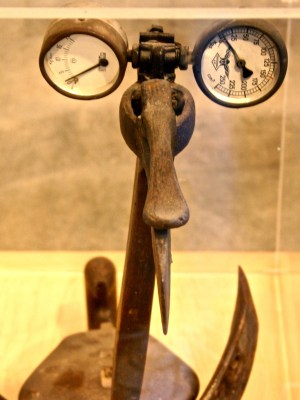
It was work, good wholesome work, that held the nation together with each nail or mended wheel. The tools of the trade were honest, having no pretense or subterfuge like found in politics. Hard tools for making horse shoes and knowing that life was better for the way the shoe fit.

My great grandfather was a smithy. He and his wife formed a team that could take on the world. They followed the principal that hard work made for honesty. They were a partnership of American ingenuity and creativity, making things that would last and be valued. On Sundays, he became the minister and she the minister’s wife. Their congregation came to church to hear sermons that extolled virtue, charity, and kindness and left feeling that the world was a wonderful place to be in. They were all one generation that followed the pioneer spirit that led to the expansion of the United States, and they were proud.

Having followed the legacy of their parents, and having bloomed in the black rich soil of Minnesota, they cherished education and culture above all else. It was this passion that brought music, theater, literature and art and made them more than simple folk. And they took their congregation with them. They were members of the Grange, a society that stood for the good in mankind. It stood for the civilized expansion of farmers, blacksmiths, small town storekeepers and it kept life refined. She played the violin, he smoked his pipe and told the young ones stories from the bible. There were contests in spelling and grammar, the spelling bee being a way to bring children up, rather than see them running wild in the world. Everything had a order to it.

Generational families lived in a house or close by. Mothers were there to help Grandmothers. Grandfathers were there to teach the young boys how to become men. Life had a purpose, and the ideals of the middle class were brought to light in the fires of the smith.

My mother was sent to my great grandparents when her parents needed time to do things that a little girl might be a pest during. But she was welcomed, hugged, given a kiss and sent to play out in the gardens with grandmother’s watchful eye keeping an eye on her. Once when she wanted to play with a bee, and wouldn’t listen to that clear warning voice, she was shocked into behaving by the application of cold water from the hose her grandmother was using to water the kitchen garden. The cold water was followed by a hug and another warning that bees needed to be bees and little girls shouldn’t play with them. There was no trauma, no extensive punishing needed. There were rules and they were best followed.

Her grandfather would work in the shop, making things for the house when he had no customers for the day. Or he would create and set aside the makings for wheels and horseshoes so that customers wouldn’t have to wait. He was always thinking ahead. New inventions fascinated him. He’d quickly learn which parts might need fixing, which parts he could mend, for that is what a blacksmith takes pride in.  Somedays he would ask Grandmother to assist him in creating an order. She was meticulous in measuring and sizing. When she had down what was needed doing, she’d return the to house where there was always something that needed doing.

Neighbors would come to tea some afternoons. They would sit at the polished kitchen and discuss the community, but never gossip. Something would have to be done, and someone was designated to do it. A young lady needed advice, and grandmother would undertake that mission after clarifying why she needed the advice. She was the backbone of the women’s charity. Every summer and fall, between harvests, the women would meet to make quilts, or clothes. The pins and needles were kept busy.

You never talked badly about your neighbor. No, instead you would listen and make the comment to change the opinion of the other. If someone was afraid that civilization would fail, she’d bolster the person to make them feel positive instead.

When a fire burnt a neighbors house, the family would rally the church to go make things right. Supplies would be donated, windows glassed, iron reinforcements used in the corners of the wooden houses. When a death occurred, the husband and wife would be the first to help the survivors mourn.

It was the smithy that caused young men to go to school and learn. It was the minister’s wife who encouraged the women to go to college. If there were funds in the church budget, small scholarships would be given for those who needed the assistance. These were never in the form of a loan, but given with the idea that education would widen your horizons so you could help others.

I know that there were problems, medical science was in its infancy and so illness was an evil that lurked in the shadows. I know also that there were wars in the future. Eventually technology surpassed the smithy, lessening the need for his services. But they prevailed over those things too. It was the iron and the smithy that brought my great-grandparents to Minnesota in a time when they were needed. They were the backbone of the community, the innovators, the compassionate.

Christmas Photo Prompt

Thursday photo prompt – Christmas Present – #writephoto

The shine of a Christmas tree in the boughs decorated with shiny balls and silvery lights lit the child’s face as nothing had done before. Chilly temperatures in the house made seeing a tree inside a logical thing, as the child had just learned cold. One year of age and just twenty days more and all of the learning that had occurred until that day melded together to make Christmas a mystical experience. The cautionary voices of mother and grandmother as they mentioned that she should look, but not touch, gave the child the first knowledge of something precious that couldn’t be grasped. Christmas would be a fleeting moment in her development. As soon as the mystery was grasped, it was also gone. Two weeks in the eyes of a child, and Christmas would be a compounding memory each year. The grandmother’s tree, decorated with family ornaments from 21 years of marriage, filled with family history and time would sit in the child’s eyes out of focus and just out of reach but remembered distantly. A message about a baby. About animals. That was my first Christmas.

Two years later, another child came to learn of the mystery of Christmas. Another one year old, and a little more, stood beneath the tree decorated with sugar cookies because the young couple was making do with what they had. Now there were three children, and a young couple trying to be independent and having none of the money for extras. The sounds of carols from a record player filled the air, and the youngest toddler heard the admonition that he should look but not touch. The cookies hung so temptingly. So he stood with his hands behind his back and bit off all of the feet as mother made a dinner and father went out to seek a Christmas present with only ten dollars in his pocket. He sought it at a hardware store, and finding something he remembered from his Christmas’s long past, a sled with bright red runners. The cost, too great, but he looked at it longingly. The spirit of Christmas filling his eyes, and seen by a salesman, was suddenly his as the man gave him the sled for seven dollars instead of twenty. He would play in the snow with his wife and children, pulling the sled down snow covered sidewalks. All of them young and happy in the moment, then it was gone. But the sled remained for many years, a testament to the spirit of sharing.

Another year, and baby three arrived. Christmas in the blue eyes at only four months of age, now living with Grandmother and Granddad as the world changed. Korea was over, Vietnam was foretold in the news. But in the home, with it’s generations, life was safe and beautiful. This year the cookies hung above the little boys head, just out of reach, except when the oldest would lower the branches just so, entertaining himself and his brother. The toys the children received gratefully disappearing into memory, a doll, a truck, a book or two, all to be well loved and used.

Another year, and the house stood on the banks of the Mississippi, and the newest edition to the family being a parakeet who flew into the open window that summer and stayed for over ten years. Uncle Ned liked the tree and the lights. This year cookies came from a Swedish bakery and were placed in a clear jar only to be opened by the mother and father. Large cookies tasting of peanut butter, sugar, chocolate chips and the mother’s oatmeal raisin cookies tempting good behavior and giving instant reinforcement when that behavior was given with ungrudging enthusiasm. It was the first tree that was in focus for me. I had received my glasses that summer. It is the first tree I remember, the clarity of vision adding mysticism to the experience. This Christmas too was fleeting. But I was now old enough to know that there would be more.

The next Christmas in another grandparent’s house, for my Grandmama needed help from my parents in managing all of the daily tasks. The room was dark, but lit by the tree. Mom never had enough time to do all of the things she needed to do. Now she was no longer working forty hours a week, instead she was making all of our clothes, cooking and baking all of the meals, cleaning the house, playing with us, reading with us, showing her competence but feeling graded at every moment.

I missed a memory the next year. The only thing I remember is singing a hymn about Jesus and the animals. “Jesus our brother kind and good, was humbly born in a stable rude and the friendly beasts around him stood.” I sang that song until June. Over and over, my poor mother must have been driven nuts by it. I started school the next year at 4 1/2. I now think that my mother must have sent me early so that she could have a break. With four babies in under five years, her hands were full and she never complained or rejected us. She did need her own place to be totally happy and that happened as we started school.

The year after, we moved into our own house a few blocks away. Those years are filled with the memory of my brother making my father laugh as he pretended to be a goat head butting him in the knees. The trees got taller. We accumulated shiny balls and figures of ancient Santas, tinsel carefully cherished from year to year. My mother made incredible ornaments from egg cartons. She made tall angels to sing in a choir out of bottles and styrofoam balls, gold paint and old sheets. There was nothing cheap about the way they looked, gleaming as they did on the one book case we owned. She made a sled out of cardboard boxes to hold presents and keep them tidy and the tree safe. We were given an apple and an orange each Christmas by Santa once our stockings were big enough to hold them. There was always a candy cane. And Robert Shaw and Harry Simone came to symbolize the way Christmas should be sung about. One year, four stockings arrived from my Aunt Diana, and pajamas the next, a start of new traditions. We went to the Swedish Institute and learned of the tale of St. Lucia. Red candle holders turned up sometime in the first few years. Ribbons hung from the curtains, in gold and green combinations and splendar.

Mom did most of the work getting ready. Dad would put the lights on the tree and we would decorate. Dad would work. He made ice for the skating rinks, leaving in the early morning to put new ice on the rinks for Christmas. Then skates arrived one year, left over from other children who no longer fit them, Dad brought them home and we learned to skate. Granddad came to skate with us. I skated on my bottom more than my feet, eventually switching to rubber boots so I could stay up. It took me years to learn. So many Christmases. We lost my grandmothers early, and missed them each year.

My mother would make clothes and toys for us by hand. She would make new clothes for the dolls that my sister and I owned. And when I discovered that she was the spirit of Mrs. Santa, she enlisted my help. She and my older brother made me a doll house from a cardboard box that looked so real and was the dream I had thought I would never receive. My mother was Christmas. For us, Christmas was the moment when we could all be happy, safe, and full of joy. We were a lot like the Whos down in Whoville. Somewhere in the early years in the green house, we became recipients of gifts from the VFW. That had been a tight year, and we were invited to a Children’s Show. Every child there received a gift by name from Santa. I wonder now if it hadn’t been part of the Marine Corps Toys for Tots program. No matter, the VFW make Christmas real. My older brother got a lock which had a gun hidden inside it that worked with caps. My baby brother got a gum ball machine, which was also a savings bank. We helped him eat all of the gum balls, only to feel chagrin later in life for having done so. My sister and I got dolls, although I don’t remember any more. I remember sitting in that room feeling special and valued. We didn’t feel like poor church mice even when money was so very tight. Then there was the Christmas that the stockings hung empty, and my father said we had not been good, Santa hadn’t come. Oh the tears welled up in our eyes, and just before we all cried boohoo, gifts were discovered, too large to fit in the stockings. Oh such joy. We had been good, as good as normal children could be. I had a stove and refrigerator that I loved until I went to College and played with constantly with my dolls. It was just the right size.

And I grew, lean and uncoordinated, very slowly, but woke up one day knowing that the time of family celebrations being over was coming soon, and not wanting them to go. But they did. I went to college and learned more of the music of the season, carefully taught by teachers who believed that the music was more than for enchanting children. I learned of nuns, and sacrifices, and brought home that knowledge for two weeks of trees and changing brothers and sisters.

Then I was gone, living on the west coast, and rejoining once more a Christmas at my Granddad’s home, which fleetingly sped past as only two days was allowed for my visit. I was gone again, this time to the East Coast where Christmas became the time I was to be married. The ceremony held in Minneapolis, just a few days after Christmas, so full of family and time that I could barely grab the holiday. I remember that it was cold, -5 degrees in the morning, and then warm 45 degrees by noon. The wedding hung over the holiday and mixed the two so in my mind that I have never been able to separate them.

After that, I had my own children. Two years apart they acted like twins by the time the boy was four and the girl was two. We had trees and presents and travelled from one family to the next for family dinners. We now had three family dinners, one with my husband’s grandparents, one with my parents and one with my Aunt Diana and Uncle Herb. The first four years were as rough for us as had been for my parents. Poor in cash but rich in grownups who realized I had bitten off more than I could chew. They provided me with stability and the knowledge that life would provide us with enough speed bumps as to make it interesting. My focus at Christmas became the tree. I could never equal what my mother had done for us, although I tried. I baked gingerbread cookies for the tree, but no one nibbled on the feet. I had learned the tale of my brother and took precautions. Each year we added ornaments that we made, candy canes made of shiny plastic beads carefully sequenced in patterns. We made bread dough ornaments. We colored paper chains and threaded cranberries and popcorn. I made some dresses for my daughter but was nothing like my mother whose clothes had turned out perfectly. I worked. I, like my mother, had gone back to school when my kids reached an age where they could understand that I needed to do homework. They were in second grade and kindergarden. My poor mother had had to wait until we were in high school. Somehow she had managed all of the decorating, shopping, baking, cooking, and never missed a step. Me, I stumbled all over the place, but my heart was in the right place even if my skills weren’t.

My father died when my son was 14, and my daughter ll 3/4. It was 1995, and I remember insisting that mom come down and stay with us. I was teaching by then. She filled the day with joy, even though her heart was broken. In the years that followed, she began packing up Christmas and moving it to a place further away in her closet. It wasn’t the same without my dad. It wasn’t the same for me either. He had taken such joy in what my mother had created for Christmas, and that joy must have been the reason she continued to be so creative for so many years.

One winter my family from Minnesota came to Virginia for the holiday. My older brother, my little sister, her husband and two children, my younger brother and my mom all fit into our house in one fell swoop. We went to Mount Vernon and Williamsburg. I was informed that I was the favorite aunt because my lap was cushy by one of my nieces.We had the tree and a feast. It felt like the old days in the green house for me. I gave my little brother a ha’ penny, but he missed the symbolism. It didn’t matter, I got the message. I wanted my family to know that they were loved. Mom took photographs, as mom always does.

Then my children grew. In 1998 the first MS attack that we can document with a certainty occurred and I slowed down. I couldn’t do the things I loved to do. My children stepped up and helped with the tree becoming more and more competent each time. Popcorn and Cranberries were no longer on the tree. Mom donated some of her ornaments and the cats took the tree out that year, as cats are wont to do. They broke and it made me sad, but still the tree was reassembled and the holiday went okay. After that, my kids were grown and mom started going out to Minnesota for the holidays. We each got her for two or three days, but the season seemed fragmented without her.

One Christmas Eve, we had finished the tree that night, my husband having to work, and the kids had a surprise for me. We had been married 24 years, and that evening my husband brought me an engagement ring. I guess he figured out he wanted me to hang around. Time sped up.

When my son returned from the Navy, he brought a wife. She had troubles, but her children were sweet. We had a tree and took the kids to all of the places children should go when they visit a grandparent. It was only for that one Christmas, but we were exhausted at the end. I lost ten pounds that holiday. It was a nice perk.

One year, we had a Charlie Brown tree that the kids found and took the bottom branch of the tree in the back year from. They wrapped a blue sheet around the bottom and it had two ornaments, one from Charlie Brown that we had had, and a new Charlie Brown ornament from my dear friend Ana.

The next Christmas and those following found my family working to keep the holidays of Halloween and Christmas according to tradition. Until present day, we struggled along as best we could. But this Christmas arrived on my birthday with all of the bells and whistles and I feel that joy that I must have felt when I was one and the tree was lit with magic. This Christmas coming in a week will be our best. My husband took a week off. We plan to go to an arboretum to see lights. The tree is up and I made handmade ornaments to add to the collection. My daughter-in-law will be staying for the holiday. My son has taken a few days off work. And the cooperation between my two children is something new and something I wanted to see. My son-in-law has been putting up with all of this Christmas stuff for me, even though he doesn’t like the holiday. My father-in-law will be here. There is a new baby due in the family soon, my niece is expecting her first any day now.

There is a dark part to this Christmas, one I don’t generally talk about and try not to let it take over my holiday. I’m not sure how many more times I will have to celebrate the holiday. My father’s side of the family dies at about 65 and that is 6 years away. I know, I shouldn’t dwell on such a thing and I should take one day at a time and be glad for the times I have. But really, 65 is way to young to die. I’ve just figured out how to play the game here. It’s all gone by so fast. It’s the hospital stay that brought this on. But I will blink and block these darker thoughts for now. I’ve got what I wanted most for Christmas. I have a family. I wish mom could be here but she’s jet setting around the world as she likes to do. She’ll stay long enough to make sure that things are still Christmas and move to the next sibling. I’ll have her back soon enough. I know, I have a book for her present and she is a bibliophile. She can’t resist a book. Neither can I.

I’m off to watch Christmas shows and create some presents from “Stuff” I have lying around that needs to be created with. I want to leave something beautiful for each of my family to glow for many more years.

Merry Christmas, happy holidays…remember the light.
 

Microfiction Challenge: The Innocent

https://janedougherty.wordpress.com/2016/12/16/microfiction-challenge-27-rescue/#respond

There was a time when innocence walked the world. With all of the magnetism usually given to heroes, she walked among us drawing the animals and children to her. What was most unusual was the lack of pretense she had  of her own value. Adults in the village thought her simple and childlike. They preferred to ignore her and her gifts. But the children understood that if they stood quietly enough, they would see a miracle. So they stood at her side and waited. Soon a fawn, or mother cat with kits, or a fox would come and sit by her side. When she smiled at the children and bid them welcome, the animals would rise and greet them as if they were equals. Sometimes they would allow themselves to be petted by children.

Rumors of her ability to see the simple but exquisite left the village and found the ears of a merchant. He came to the village and brought her gifts of magnificent beauty. He begged her to marry him, but she refused. Angered by her decision, the merchant went to the town’s mayor and demanded that the woman be given to him. The mayor, ignoring all that the children had gossiped about her, agreed that it was well past time for her to be married, as a single woman was a danger to the balance of harmony in the village. Sending a group of elders to the woman they demanded that she comply with the mayor’s orders. Again she refused. The merchant left, angry and full of lies. These lies spread through the country. Lies that told of her possessing the souls of children and animals. Lies that called her a witch or sorceress, lies that gave her power over the divine, and lies that gave her the power of ensorcelling an entire village spread like wildfire.

Eventually the king heard of the woman, and believing a village in his domain was at risk of demonic possession, sent a squadron of trained soldier to arrest her and bring her back to be tried for her crimes.

They found her in her home, the fawn and mother cat by her side, and bound her arms and legs. They slew the animals. The children screamed and cried, they protested the cruel treatment of their friend, but no one paid heed to them. Those that cried the loudest were also bound hand and foot and were taken to the king to show how the innocent had stolen their souls. The parents of the children now cried out in terror, fearing for the lives of their children. They were ignored as hysterical. If the soldiers had any qualms at all it was because of the innocent’s stillness. For she made no cry or complaint, only turned to the children and told them she loved them.

On the trip to her trial, she waited calmly, sure that no one could find a complaint against her. She was wrong. Arriving at the capitol city, she found that a pyre had been erected in advance, her guilt assumed. The trial began immediately. No time was given for her to freshen or eat. No kindness was extended to her or the children. The chief witness against her was the merchant who spoke of how she had refused his marriage proposal. He spoke of how she had so ensorcelled the town that even the mayor’s orders were not obeyed. He said he only wanted to give her the protection a married woman needed, for no woman was complete without a husband.

The children were called to testify, but were to terrified to do more that speak of her friendships with the creatures of the wild. They spoke only of her kindness and sharing. Enraged, the merchant called out. How dare they speak of something they were too young to understand. Surely the judge must see that they were under a demonic curse, that they were possessed. The judge was a wise old man, kin to king, and of a noble house greatly revered.

“Let the woman be led into the forest with myself to guard her. Let us see what she does to free herself.”

The judge led the woman and a squadron of soldiers to a clearing in the nearby woods where it was rumored that one of the great tigers lived. She was tied to a pole and a cut was given to her arm. Bleeding, she sobbed that she had done nothing wrong. But she was mistaken, she had done one thing she didn’t even know she had done. The blood pouring from her arm was pure of evil and malice, and it drew the tigress from her den where her young ones were growing.

Tigress smelled the blood and was drawn to it like a moth to candle. She entered the clearing, ready to kill this scent, for it was like a forbidden wine and she must have it. Finding the sobbing woman, she paused.

“Why do you sob and bleed the tears and blood of the innocent?”

The woman didn’t reply, but she also didn’t fear the great cat. The cat, coming close, tasted the blood flowing from the woman’s arm. The woman stopped sobbing, and did something unexpected.

“You must go, Tigress, for there is a squadron of soldiers hiding in the bush watching and they will kill you. Flee for the life of your children. Roar at me and run. I am doomed as it is. A man has made false charges against me and I can not prove my innocence for I did refuse him.”

“I am not afraid,” answered the tigress. She continued to lick the bleeding arm until the bleeding was staunched. Then she bite through the ropes that held the woman, freeing her. At once the judge jumped into the clearing.

“Take her now and kill her for she has captured the soul of the tiger.” And on that command, soldiers burst into the clearing fearing not the tiger but that innocent who had no protector to stand before her. Intent on killing her, they did not see the whirl of the tigress and she turned and used her claws to strike down the first soldier. They ignored the death of a second soldier, thinking that the woman controlled the tiger. As the third soldier fell, a spear point stabbed the woman in the abdomen and she crumpled to the ground. Enraged, the tigress stuck right and left until at last only the judge stood before her. He cowered, crying out, “Leave me be, I am a righteous man. It was a fair sentence.”

The tigress was disgusted. How had all of the adults missed the sign of a goddess on earth in human form. She turned to the woman who was dying. The last thing she expected was about to happen.

Opening her eyes for a final moment, the woman blessed her and her offspring. “Thank you for your protection. I will be with you in the afterlife to protect you and all of your species for your kindness. I ask only one thing. Please escort the children who were stolen from their homes to a place of safety. Make them part of your litter and care for them as  you care for your cubs. Children deserve wonder in their lives and should not be deprived of it. My mistake was to let others know that kindness was a virtue. Forgive me, Tigress.”

She died, as all true heroines must. But the tigress having heard her words, called  upon her people to join her in taking the children from the soldiers as they were being returned home. Striking with great violence, the children were liberated and given tiger back rides to the forest where they met their new brothers and sisters. No one saw them again, but it is said that if you wander into the woods and sit still and listen, you can hear the shouts of joy as the young of both species played together with great respect for each other and with kindness to all they met.

Innocent died but others came that taught over and over that kindness was a virtue. The tigress still waits for us to learn that lesson.

Goal: A Limerick Challenge

A Barcelona Child, while soccer was playing,
Did kick the ball to his old mother graying,
It bounced so hard,
It left the yard,
In the atmosphere weightless it is staying.

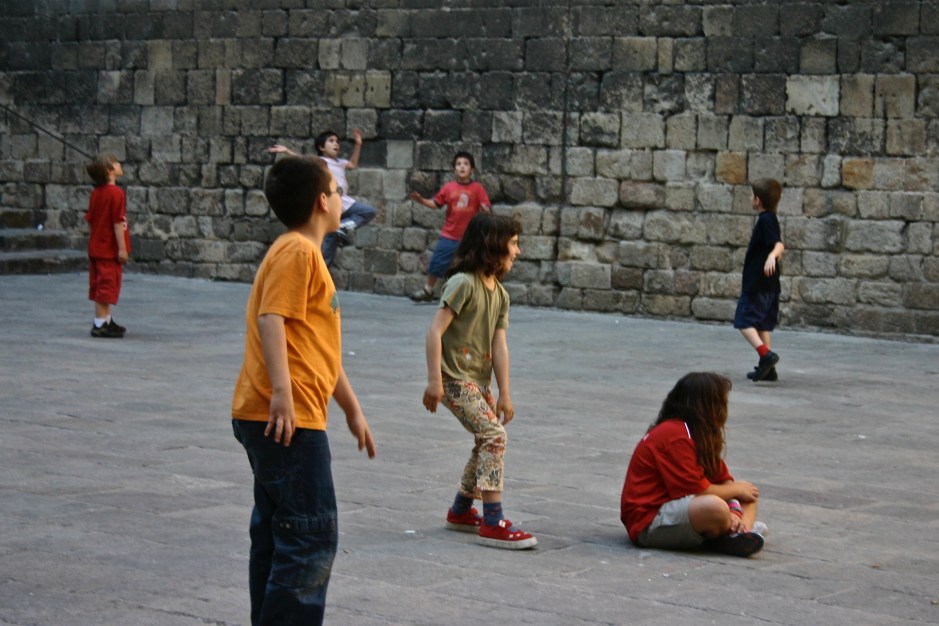
Funny, somedays you just need a good limerick or a bad one. I’m looking for the positive in my own world. I got to watch some young children playing soccer in the Old City of Barcelona, that fortress that is a bastion of museums and the baroque. No one seemed to mind that they were using the old wall for sport and I enjoyed watching them be happy kids.

The challenge: https://mindandlifemattersblog.com/2016/12/10/limerick-challenge-week-50-goals/